It's easy to get stuck in a rut when it comes to humor, especially when we lean on the familiar, like the quick sting of an insult or the gentle jab of a witty remark. For years, digital tools have honed the art of generating these sharp retorts, offering up endless comedic ammunition for games, bots, and playful banter. But what if you’re aiming for laughter that doesn't rely on cutting words? What if your creative needs extend far Beyond Insults: Other Verbal Humor Generators can unlock entirely new avenues for wit, charm, and unexpected delight. This isn't just about avoiding offense; it's about expanding your comedic toolkit and discovering fresh, engaging ways to make people smile, ponder, or outright guffaw.
At a Glance: Your Journey Beyond Insults
- Expand Your Laughter Portfolio: Discover a rich spectrum of humor types beyond just playful insults, including puns, absurdities, clever analogies, and situational comedy.
- Unpack Generator Mechanics: Get a clear, jargon-free understanding of how verbal humor generators, from simple templates to advanced AI, craft their magic.
- Master Diverse Humor Forms: Learn the unique characteristics, applications, and potential pitfalls of various non-insult humor styles.
- Build Your Own Wit Machine: Gain practical insights into conceptualizing and guiding humor generators to create custom, on-brand comedic content.
- Apply Wit Everywhere: See how generated humor can enhance content, game design, chatbot personalities, creative writing, and everyday interactions.
- Navigate the Nuances: Understand best practices for ensuring generated humor is relevant, appropriate, and genuinely funny, not just random.
The Unsung Architects of Laughter: Why Go Beyond Insults?
For many, the first encounter with a verbal humor generator might have been through a "random insult generator." Tools like those found at FunGenerators have perfected the art of spitting out "hilarious, creative, and unique insults instantly," perfect for "playful banter, ice breakers, and online games." Others, like InsultMaker.com, even leverage AI to create custom insult generators tailored to specific personas – imagine an "angry librarian" or "sarcastic robot" dishing out specialized burns. This niche is incredibly popular for its immediate, often shocking, comedic effect. There's a primal satisfaction in a well-aimed, albeit fictional, verbal jab, and these generators have proven their utility in adding spice to digital interactions, game narratives, and even chatbot personalities. If you’re looking to dive into this particular brand of humor, you can always Generate your own insults with dedicated tools.
However, the world of verbal humor is vastly larger than just the clever put-down. While insults can be sharp and entertaining, they also have their limitations. They can be divisive, often rely on shock value, and aren't suitable for every audience or context. Imagine trying to integrate an insult generator into a children's story or a professional marketing campaign – the results would likely be disastrous.
Stepping beyond the realm of pure insults opens up a treasure trove of comedic possibilities. We’re talking about humor that unites rather than divides, that sparks intellectual delight, that builds worlds, and that genuinely surprises with its cleverness or absurdity. This is where the true versatility of verbal humor generators shines, moving from simple roasts to sophisticated wit that enriches almost any form of communication or creative endeavor.
Cracking the Code: How Verbal Humor Generators Work (The Basics)
Before we explore the diverse forms of non-insult humor, it’s worth understanding the foundational mechanics behind how any verbal humor generator operates. At their core, these tools are pattern-matchers and concept-combiners.
Initially, many generators relied on pre-written templates and vast databases of words, phrases, and structures. A simple "mad libs" style approach might take an adjective, a noun, and a verb, and slot them into a pre-defined sentence structure like, "You are a [adjective] [noun] who [verb]s like a [animal]." While rudimentary, this method could produce amusing, if sometimes nonsensical, results.
The real game-changer, however, has been the advent of Artificial Intelligence and Machine Learning, particularly in Natural Language Processing (NLP). Modern AI-powered generators don't just fill in blanks; they learn the nuances of language, tone, and context from massive datasets. They can identify semantic relationships, understand stylistic preferences, and even infer emotional resonance.
For instance, an AI designed to generate puns doesn't just randomly pair words. It analyzes word meanings, phonetic similarities, and common phrases to suggest clever linguistic twists. Similarly, an AI creating a "sarcastic robot" voice (as alluded to in insult generator examples) has been trained on patterns of sarcasm, irony, and specific vocabulary associated with that persona. It learns to subvert expectations and deliver lines with a characteristic dry wit.
This shift means that instead of merely generating random output, advanced systems can generate tailored output. You can often guide these tools by describing your desired "vision" – whether it's the style of a "pretentious art critic," a "grumpy gnome," or a "melodramatic theater director." The AI then uses its understanding of language and context to craft humor that aligns with your specific tone, vocabulary, and personality requirements. It's less about a magic button and more about intelligently combining linguistic elements to achieve a specific comedic effect.
A Palette of Playfulness: Exploring Non-Insult Humor Generators
Moving beyond the directness of an insult, a vast landscape of verbal humor awaits. These forms often require more subtlety, cleverness, or a touch of the absurd, making them incredibly rewarding to generate and consume.
Puns & Wordplay: The Linguistic Jester
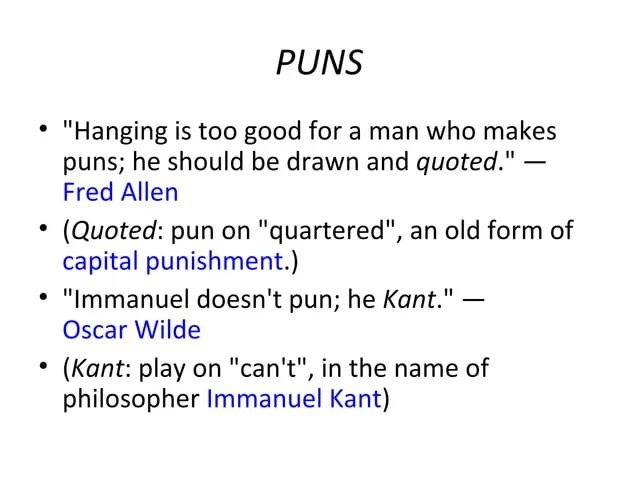
Puns are perhaps the most accessible form of non-insult verbal humor. They rely on the playful manipulation of language, exploiting words with multiple meanings or words that sound alike but have different meanings.
- How They Work: Generators for puns often leverage phonetic databases and semantic networks. They might take a keyword, identify homophones or words with double meanings, and then attempt to integrate them into a sentence that creates a humorous double entendre. For example, if you input "fish," a pun generator might return, "I’m hooked on fishing, it’s a reel-y good time!" or "What do you call a fish with no eyes? Fsh!"
- When to Use Them: Puns are fantastic for lighthearted content, catchy headlines, advertising slogans, icebreakers, or adding a quick moment of levity to a serious discussion. They’re great for branding that aims for approachable cleverness.
- Crafting Effective Ones: The best puns are often concise and emerge naturally from the context. They should evoke an "aha!" moment rather than a groan of confusion. Pitfalls include being too obscure, forced, or overly complex, which can make the humor fall flat. A good pun makes you smile, a bad one makes you sigh.
Analogy & Metaphor Generators: Illuminating Humor
Analogy and metaphor aren't always seen as outright humor, but when skillfully deployed, they can be incredibly funny, providing unexpected insights or ludicrous comparisons. Humorous analogies draw parallels between two vastly different things, often highlighting a shared absurd characteristic.
- How They Work: These generators often work by mapping attributes or functions from one domain to another. For humor, they might take a common situation and liken it to an utterly outlandish or inappropriate scenario. For instance, explaining the complexities of office politics by comparing it to a squirrel trying to open a jar of pickles.
- Utility & Laughter: Humorous analogies can simplify complex ideas ("Explaining blockchain to my grandma is like teaching a cat calculus"), offer unique perspectives ("My morning routine is a carefully choreographed ballet performed by a sleep-deprived sloth"), or simply delight with their inventiveness. They're excellent for creative writing, speeches, or engaging presentations.
- Making Them Stick: The key is to find comparisons that are unexpected yet strangely apt. The humor often comes from the juxtaposition of the familiar with the bizarre. Avoid analogies that are too obvious or too convoluted, as they lose their comedic punch.
Absurdist & Surreal Generators: Embracing the Illogical
This is where humor gets truly weird and wonderful. Absurdist and surreal humor defy logic and common sense, finding comedy in the illogical, the unexpected, and the utterly nonsensical. Think Monty Python, "Alice in Wonderland," or the works of Dr. Seuss.
- How They Work: These generators often operate by deliberately breaking semantic rules, combining disparate concepts without rational connection, or generating non-sequiturs. They might draw from vast databases of nouns, verbs, and adjectives and randomly stitch them together in syntactically correct but semantically bizarre ways. For example, "The enthusiastic teacup sang a lullaby to the bewildered satellite dish while knitting a sweater for a philosophical garden gnome."
- Why They’re Funny: The humor in absurdity comes from the shock of the unexpected and the delight in the illogical. It challenges our brains to find meaning where there is none, often resulting in a burst of laughter as our logical framework collapses. It’s a form of cognitive play.
- Applications: Absurdist generators are fantastic for creative writing prompts, game dialogue (especially for quirky NPCs), performance art scripts, or simply generating unique and memorable content for social media that stands out. They thrive in contexts where breaking conventions is encouraged.
Story & Scenario Starters (with a Humorous Twist): Plotting the Punchline
While full story generators exist, a more focused approach for humor involves generating specific, humorous plot points, character quirks, or absurd scenarios that can kickstart a narrative.
- How They Work: These tools might combine elements like:
- Protagonist: "A clumsy detective afraid of pigeons."
- Goal: "Must recover a stolen rubber chicken."
- Obstacle: "The only witness is a talking toaster."
- Humorous Twist: "The toaster only speaks in haikus about existential dread."
Such combinations provide instant comedic potential for writers. - Inspiring Creativity: For screenwriters, novelists, or game designers facing writer's block, these generators offer quick, funny starting points that can evolve into richer narratives. They bypass the blank page paralysis by giving you a kernel of hilarity to expand upon.
- Making It Work: The key is specificity and unexpected pairings. Generic ideas tend to fall flat. The more unique and contrasting the elements, the higher the comedic potential.
Character Voice & Dialogue Generators: Crafting Conversational Comedy
Beyond just insults, AI can now be tuned to generate dialogue in a specific comedic voice or persona. This is incredibly powerful for writers developing characters or for chatbots aiming for a distinct personality.
- Leveraging AI: Drawing inspiration from the AI-powered insult generator that can craft insults in the style of a "disappointed chef" or "sarcastic robot," these tools generalize that concept to any form of dialogue. You can specify a tone (whimsical, cynical, overly dramatic), a vocabulary (archaic, modern slang, technical jargon), and a personality trait (optimistic, perpetually grumpy, overly enthusiastic).
- Generating Witty Banter: Imagine a generator that provides lines for a perpetually flustered wizard, a perpetually bored cosmic entity, or an overly polite assassin. This is invaluable for creating memorable NPCs in games, crafting unique character voices for novels, or giving chatbots a truly engaging and often humorous personality.
- Tools for Engagement: For game developers, this means fewer generic lines and more character-driven humor. For customer service bots, it can mean a delightful interaction that leaves a positive impression, transforming a mundane exchange into a moment of unexpected wit.
Situational Irony & Paradox Generators: The Subtle Smirk
Situational irony arises when the outcome of an event is contrary to what was expected, especially when the contrast is humorous. Paradox presents a statement that, despite apparently sound reasoning, leads to a conclusion that seems logically unacceptable or self-contradictory. Both can be sources of sophisticated, often subtle humor.
- How They Work: Generators for situational irony might pair a common expectation with a highly improbable or contradictory outcome. For example, "A fire station burns down due to an electrical fault," or "A nutritionist chokes on a kale smoothie." Paradox generators might combine seemingly opposing concepts to create a thought-provoking, often humorous, statement like "The only way to get rid of a temptation is to yield to it." (Oscar Wilde knew a thing or two about this).
- Subtle Humor: This type of humor appeals to those who appreciate a more intellectual, less overt form of comedy. It requires a moment of reflection to 'get' the joke, making the payoff often more satisfying. It also lends itself well to social commentary or philosophical musings presented in a palatable, amusing way.
- Applications: Great for satirical writing, editorial cartoons, philosophical jokes, or adding layers of nuanced humor to dialogue where a character’s circumstances are ironically juxtaposed with their intentions.
Building Your Own Laughter Machine: Tips for Custom Humor Generation
The beauty of advanced verbal humor generators, especially those with AI at their core, is their capacity for customization. You’re not just accepting random outputs; you’re guiding the creation of specific, targeted humor. Think of yourself as a comedic architect.
- Define Your Desired Tone: This is paramount. Do you want whimsical, dry, sarcastic, slapstick, gentle, cynical, or earnest humor? The more clearly you articulate the desired tone, the better the generator can attune its output. For example, "Generate three absurd compliments in the style of a British butler who secretly despises everyone."
- Specify Context and Audience: Who is this humor for? A children's book? A corporate presentation? A sci-fi game? The context dictates the appropriateness and style. An AI can filter out inappropriate language or adjust complexity based on this input. For instance, "Create a funny, encouraging motto for a struggling amateur sports team, suitable for a locker room poster."
- Provide Good Input/Training Data (Conceptually): If you're using an AI that can learn, or even just a sophisticated template-based system, the quality of your examples matters. If you want humor like Douglas Adams, feeding it examples of his style will yield better results than just saying "make it funny." While you might not literally "train" the AI yourself, understanding this principle helps you craft better prompts for existing tools.
- Iterate and Refine: The first output might not be perfect. Treat the generator as a creative partner. If a pun is too obvious, ask for a more obscure one. If a scenario isn't absurd enough, push for more bizarre elements. Refine your prompts, provide feedback, and experiment with different parameters.
- The Human Touch: Generators as Tools, Not Replacements: Remember, no generator can fully replicate the nuanced, intuitive genius of human humor. AI can mimic patterns, combine concepts, and generate ideas, but a human editor is crucial for fine-tuning, ensuring genuine comedic timing, and confirming cultural sensitivity. Use generators to overcome writer's block, explore new ideas, or quickly populate content, but always apply your own comedic sensibility for the final polish. The machine provides the ingredients; you bake the cake.
Beyond the Screen: Applying Generated Humor in Real-World Scenarios
Verbal humor generators aren't just for digital parlor tricks. Their output can be incredibly valuable across a wide array of applications, breathing life and personality into projects.
- Content Creation & Marketing: Injecting humor into blogs, social media posts, email newsletters, or advertising copy can significantly boost engagement. A well-placed pun or a genuinely funny analogy can make your content more memorable and shareable. Imagine a coffee brand using absurdist taglines generated by AI, or a financial blog explaining complex topics with humorous, relatable metaphors.
- Gaming & Interactive Experiences: Beyond insult battles, humor generators can create unique dialogue for non-player characters (NPCs), add flavor text to item descriptions, generate surprising quest objectives, or even invent comedic lore. This makes game worlds feel richer and more dynamic. A simple "sarcastic robot" character can become iconic with well-generated quips.
- Chatbots & AI Assistants: To avoid bland, robotic interactions, incorporating diverse verbal humor can give chatbots distinct personalities. A bot that can offer a clever pun or a whimsical observation, rather than just transactional responses, elevates the user experience and fosters a more human-like connection. This is crucial for building user loyalty and engagement.
- Creative Writing & Storytelling: For novelists, poets, screenwriters, or playwrights, these generators are powerful brainstorming tools. Stuck on a character's witty comeback? Need a bizarre plot twist? Want a unique metaphor to describe a feeling? Generators can provide sparks of inspiration that can unlock entire narratives or sharpen individual lines. They can help writers find fresh angles and overcome creative blocks.
- Educational Content: Humor makes learning more enjoyable and memorable. Clever analogies can demystify complex scientific concepts, and humorous scenarios can illustrate historical events or ethical dilemmas in an engaging way.
- Everyday Banter (with Caution!): While less formal, generated humor can even add a touch of novelty to personal communications, social gatherings, or icebreaker activities, provided it's used appropriately and in good taste. Just remember, context is king!
Navigating the Humor Minefield: Pitfalls and Best Practices
While the potential of verbal humor generators is immense, they are tools, and like any tool, they can be misused. Here's how to ensure your generated humor lands well and avoids common traps.
- Avoiding Repetitive Output: Even advanced AI can fall into patterns. If you notice the same joke structure or type of wordplay reappearing, it’s a sign to refine your prompts or explore different generator settings. Aim for variety in your humor to keep it fresh and engaging.
- Ensuring Cultural Sensitivity and Appropriateness: This is perhaps the most critical pitfall. What’s funny in one culture or context can be offensive in another. Generators, especially those trained on vast, uncurated internet data, can inadvertently produce insensitive or culturally tone-deaf humor. Always review and filter generated content through a lens of empathy and cultural awareness. When in doubt, err on the side of caution.
- The Fine Line Between Clever and Forced: Some generated humor, particularly puns or elaborate metaphors, can feel contrived or "trying too hard." The best humor often feels effortless. If a joke doesn't flow naturally from the context, it’s usually best to discard it or rework it significantly.
- Context Is King: A joke that's hilarious in a stand-up routine might be utterly inappropriate in a eulogy. Always consider where and to whom the humor is being delivered. Generators can't understand the full emotional landscape of your audience; that's your job.
- Testing with an Audience: If possible, test generated humorous content with a small, representative audience before broad deployment. What you find funny might not resonate with others, or worse, might be misinterpreted. Their feedback is invaluable for refining your approach.
- Don't Overdo It: Even the best humor can become tiresome if it's constant. Strategic placement of humor is often more effective than an relentless barrage of jokes. Like a seasoning, use it to enhance, not overpower, your main message.
Frequently Asked Questions About Humor Generation
Are humor generators replacing human comedians?
Not at all. Humor generators are powerful tools for assisting human creativity, overcoming writer's block, and generating raw material. They can mimic comedic styles and patterns, but they lack genuine understanding, lived experience, and the ability to spontaneously adapt to a live audience's nuances – all crucial elements of human comedy. Think of them as co-writers or idea machines, not performers.
How can I make generated humor sound more natural?
Focus on providing very specific prompts that include desired tone, persona, and context. After generation, edit the output to integrate it seamlessly into your existing text, ensuring it matches the flow and rhythm of human speech. Look for awkward phrasing, overly complex sentence structures, or repetitive word choices and refine them. The goal is to make it sound like you wrote it, even if a machine helped with the idea.
What's the difference between AI-generated and template-based humor?
Template-based humor generators rely on pre-defined structures where specific words or phrases are slotted into blanks (e.g., "You are a [adjective] [noun]"). They are often simple, predictable, and can quickly become repetitive. AI-generated humor, on the other hand, uses advanced machine learning to understand language, patterns, and context. It can generate more varied, nuanced, and contextually appropriate humor without being explicitly programmed for every possible output, allowing for more creative and less predictable results.
Your Next Laugh Awaits: Embracing the Future of Digital Wit
The journey Beyond Insults: Other Verbal Humor Generators isn't just about expanding your comedic repertoire; it's about embracing a more versatile, inclusive, and creative approach to wit. From the subtle twist of a pun to the mind-bending delight of absurdity, these tools offer an incredible playground for anyone looking to add sparkle, depth, and genuine smiles to their content, projects, or even everyday conversations.
The capabilities of AI in humor generation are only growing, promising even more sophisticated and context-aware comedic outputs in the future. As creators, our role is to be the skilled conductors of this digital orchestra of wit – guiding, refining, and imbuing the machine-generated laughter with the essential human touch. So, go forth, experiment, and let these generators help you craft humor that truly resonates, surprises, and delights. Your next great laugh might be just a prompt away.