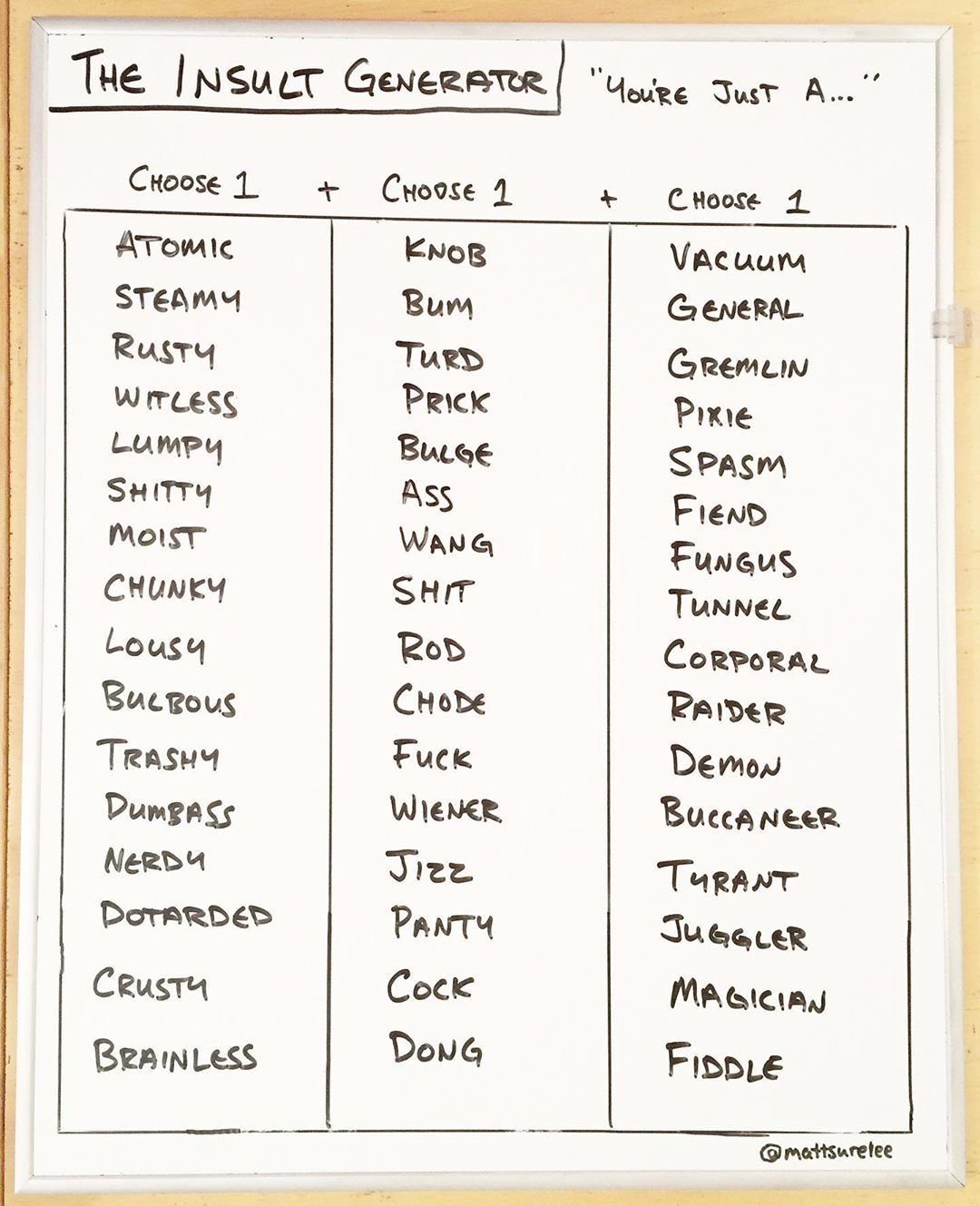
The line between a clever quip and an awkward gaffe can be perilously thin, especially when humor involves a playful jab. In a world increasingly navigating digital communication, mastering the art of the friendly roast or witty comeback is a social superpower. This is where tools like AI-powered insult generators come in—not as weapons of verbal destruction, but as fun, creative aids for using insult generators effectively to sharpen your wit and elevate your banter.
Imagine having a personal comedian in your pocket, ready to whip up a perfectly timed, style-appropriate retort. This guide isn't about fostering hostility; it's about harnessing the power of well-crafted, lighthearted insults to enhance social interactions, spark laughter, and even boost your own comedic timing.
At a Glance: Key Takeaways for Effective Insult Generation
- It's for Fun, Not Fights: The primary purpose is playful banter, not genuine offense.
- Know Your Audience & Relationship: An insult only lands if the recipient understands the jest and trusts your intentions.
- Choose Your Style Wisely: AI generators offer Witty, Sarcastic, Roast, Playful, and Savage—each with its own nuance.
- Context is King: What flies at a casual friend group might bomb at a formal event.
- Delivery Matters: A witty line can fall flat without the right tone, timing, and body language.
- Learn, Don't Just Copy: Use generators as inspiration to hone your own comedic voice.
- Be Ready to Apologize: If a joke misses, own it and move on.
The Modern Dilemma: Crafting Humor in a Digital Age
In-person banter thrives on spontaneity, shared history, and non-verbal cues. Online, however, those nuances often get lost, making it harder to convey playful intent. We’ve all seen a text message or comment taken the wrong way, escalating a harmless joke into an unintended conflict. This challenge is precisely why tools designed to generate specific types of insults can be so valuable, helping you articulate humor that's less prone to misinterpretation.
The goal isn't to be mean, but to be clever. It’s about that perfect retort that makes everyone laugh, including the target. It’s about building camaraderie, not breaking it down. When you understand the underlying mechanics of humor and the specific formulas that make certain insults land playfully, you can wield them with confidence and charm.
Unleashing the AI: Understanding Your Insult Generator
At its core, a good AI insult generator is less about "insulting" and more about "roasting" in the comedic sense. Think of it as a joke-writing assistant for specific social situations. These tools leverage "proven templates from master roasters" to construct comebacks and quips that are designed to be friendly and engaging.
Typically, such generators offer a range of styles and intensity levels, giving you granular control over the output. For instance, the AI Insult Generator provides five distinct styles and three intensity levels, ensuring you can tailor your verbal jab to almost any lighthearted occasion.
The Five Flavors of Funny: Diving Into Insult Styles
Each style of insult serves a different purpose and resonates with a different kind of humor. Knowing which one to pick is the first step in effective use.
1. Witty: The Intellectual Feather Tap
Witty insults are the brainy cousins of the roast. They rely on clever wordplay, unexpected turns of phrase, and often a touch of irony. The humor comes from the sharpness of the observation and the ingenious way it's expressed, rather than direct aggression.
When to Use It: Ideal for intellectual sparring, quick-thinking friends, or when you want to impress with your mental agility. It's generally less personal and more about the general absurdity of a situation or idea.
The Formulas at Play:
[Target] is so [Quality] that [Exaggeration]- Example: "You're so dense that light bends around you." (A classic, implying a lack of intelligence.)
If [Target] were any more [Trait], they'd [Consequence]- Example: "If you were any more basic, you'd be pH 14." (A humorous science reference for someone unoriginal.)
[Target] has the [Attribute] of a [Comparison] and the [Attribute2] of a [Comparison2]- Example: "You have the charisma of a wet blanket and the wit of a brick." (A double-barreled comparison highlighting deficiencies.)
I've seen [Comparison] with more [Quality] than [Target]- Example: "I've seen participation trophies with more accomplishments than you." (A subtle jab at perceived underachievement.)
[Target]'s [Trait] is like [Metaphor] - [Punchline]- Example: "Your intelligence is like a black hole - it sucks everything in and nothing escapes." (Creative analogy to suggest a lack of intellect.)
The only thing [Comparative] than [Target]'s [Trait] is [Exaggeration]- Example: "The only thing lower than your standards is the bar you set for yourself." (A witty critique of low expectations.)
2. Sarcastic: The Tongue-in-Cheek Masterclass
Sarcasm is the art of saying one thing but meaning the opposite, often with an exaggerated positive tone that thinly veils a negative truth. It requires a listener who can pick up on the subtle cues, making it a high-risk, high-reward humor style.
When to Use It: Best for friends who appreciate dry humor and can easily distinguish between literal meaning and actual intent. It's great for subtly highlighting obvious flaws or ironic situations.
The Formulas at Play:
Wow, [Target] is so [Positive Quality]. Said no one ever.- Example: "Wow, you're so good at reading the room. Said no one ever." (Classic sarcastic dismissal of social awareness.)
Oh great, [Target] is [Action]. Just what we needed.- Example: "Oh great, you're giving advice again. Just what we needed." (Implying the advice is unwelcome or unhelpful.)
I love how [Target] thinks [Belief]. It's adorable.- Example: "I love how you think you're the main character. It's adorable." (A gentle but cutting jab at self-importance.)
[Target] could [Action], but that would require [Impossible Requirement]- Example: "You could admit you're wrong, but that would require self-awareness." (Sarcastic critique of stubbornness.)
Thanks, [Target], for [Negative Action]. Really helpful.- Example: "Thanks for stating the obvious. Really helpful." (Sarcastic thanks for a non-contribution.)
Congratulations to [Target] for [Mediocre Achievement]. Truly groundbreaking.- Example: "Congratulations on doing the bare minimum. Truly groundbreaking." (Understated mockery of low effort.)
3. Roast: The Direct, Exaggerated Hit
Roasts are more direct than witty remarks, often exaggerating a perceived flaw or characteristic for comedic effect. They thrive in environments where everyone is in on the joke, and the target is expected to take it in stride. Think stand-up comedy specials or celebrity roasts.
When to Use It: Perfect for close friends, celebratory events, or designated "roast" sessions where everyone understands the playful nature. It's about affection masked by exaggerated criticism.
The Formulas at Play:
[Target] brings nothing to the table except [Negative Quality]- Example: "You bring nothing to the table except the table you're sitting at." (A blunt, but humorous, observation of a non-contributor.)
[Target] is proof that [Statement]- Example: "You're proof that participation trophies have gone too far." (A pointed roast connecting someone to undeserved accolades.)
If [Target] had a dollar for every [Quality], they'd [Result]- Example: "If you had a dollar for every good idea, you'd be in debt." (A financially themed jab at a lack of innovation.)
[Target] is the human equivalent of [Disappointing Thing]- Example: "You're the human equivalent of a participation trophy." (Again, highlighting mediocrity with a relatable comparison.)
I'd agree with [Target], but then we'd both be [Negative State]- Example: "I'd agree with you, but then we'd both be wrong." (A direct and humorous dismissal of someone's opinion.)
[Target] has reached new heights of [Negative Quality]- Example: "You've reached new heights of mediocrity." (A straightforward accusation of being consistently average.)
4. Playful: The Gentle Tease
Playful insults are the softest touch in the insult spectrum. They're designed to tease, not wound, often highlighting minor quirks or situations with an air of affection. The intent is always to build connection and elicit a smile, perhaps even an eye-roll.
When to Use It: Ideal for new acquaintances, very sensitive friends, or when you want to introduce light humor without any risk of offense. It’s about gentle ribbing.
The Formulas at Play:
[Target], bless your heart, you tried- Example: "Bless your heart, you tried." (A classic Southern idiom implying a sweet but ultimately failed attempt.)
Not [Target] thinking they can [Action]- Example: "Not you thinking you can pull that off." (A mild, questioning jab at someone's perceived capabilities.)
[Target] woke up and chose [Choice]- Example: "You woke up and chose chaos." (A humorous observation of someone's tendency to disrupt or be unpredictable.)
Imagine being [Target] and [Situation]. Couldn't be me.- Example: "Imagine being you and having that opinion. Couldn't be me." (A lighthearted, self-deprecating way to disagree.)
The [Trait] is [Intensity] with this one- Example: "The audacity is strong with this one." (A popular meme-inspired phrase for someone bold or presumptuous.)
5. Savage: The Edgy, No-Holds-Barred Remark (Use with Extreme Caution)
Savage insults are the most aggressive and direct. They pull no punches and are meant to deliver a powerful, memorable blow. While sometimes hilarious in the right context (think comedy roast battles), they carry the highest risk of genuinely offending someone if not delivered perfectly to the exact right audience.
When to Use It: Only with extremely close friends who explicitly enjoy this style of humor, within very specific, mutually agreed-upon "roast" settings. Never use with strangers, in professional environments, or if there's any doubt about the recipient's ability to take it.
The Formulas at Play:
[Target] is the reason [Product] has warning labels- Example: "You're the reason shampoo has instructions." (Implying extreme lack of common sense.)
Somewhere out there is a tree working hard to replace the oxygen [Target] wastes- Example: "Somewhere out there is a tree working hard to replace the oxygen you waste." (A harsh jab at someone's perceived uselessness.)
Everyone who ever loved [Target] was wrong- Example: "Everyone who ever loved you was wrong." (An extremely cutting, personal attack, only for the deepest, most ironic friendships.)
[Target] is what happens when [Mistake] meets [Disaster]- Example: "You're what happens when overconfidence meets incompetence." (A sharp summation of perceived flaws.)
I refuse to battle wits with [Target]. I don't fight unarmed opponents.- Example: "I refuse to battle wits with you. I don't fight unarmed opponents." (A powerful, condescending dismissal of someone's intelligence.)
Beyond Style: Choosing the Right Intensity and Context
Once you've picked a style, consider the intensity. Most generators offer varying levels, from light to medium to high. Think about:
- The Relationship: Are you playfully jabbing a sibling, a casual friend, or someone you barely know? The closer the bond, the more leeway you have for higher intensity (within reason).
- The Environment: A loud party tolerates more aggressive humor than a quiet coffee shop. Online forums, group chats, or gaming sessions each have their own unspoken rules.
- The Individual's Sense of Humor: Some people are naturally more sensitive than others. Always err on the side of caution if you're unsure.
- The Purpose: Are you just trying to get a chuckle, or are you trying to truly "win" a verbal exchange? Remember, the goal is always fun.
Remember that the AI Insult Generator is explicitly designed for friendly roasts, comebacks, and playful banter. This underscores the importance of intent. The tool provides the words, but you provide the heart (or the lack thereof, in a purely comedic sense!).
To get started honing your own skills, you can Generate your own insults and experiment with different styles and intensities.
Mastering the Art of Delivery: More Than Just Words
Even the most brilliant AI-generated insult can fall flat, or worse, cause offense, if not delivered correctly. Your words are only one part of the equation.
- Timing is Everything: A joke that's perfectly timed after a specific event or comment will land much harder than one delivered out of the blue. Don't force it; wait for the natural opening.
- Know Your Audience (and Your Target): This is paramount. What flies with your closest friend might bomb with a colleague. Understand their boundaries, their sense of humor, and any sensitive topics to avoid. Never punch down (i.e., target someone based on inherent disadvantages or power imbalances).
- Body Language and Tone: When delivering a playful insult in person, a smile, a wink, a light touch on the arm, or an exaggerated dramatic pause can signal "I'm kidding!" Tone of voice is also critical—keep it light, teasing, and friendly, not aggressive or genuinely mean-spirited.
- Reading the Room: Pay attention to reactions. Is everyone laughing? Is the target smiling? Or is there awkward silence and a strained expression? Be ready to pivot or apologize if the humor isn't landing as intended.
- The "Mutual Consent" Rule: Good banter is like a friendly game of tennis. Both players need to be willing participants. If someone isn't engaging or seems uncomfortable, back off immediately.
- Don't Overdo It: A single, well-placed insult is fun. A barrage of them can quickly turn annoying or even cruel. Quantity rarely beats quality in humor.
Practical Application: Where to Deploy Your Generated Wit
Knowing how to use an insult generator effectively involves identifying the right scenarios where such humor is not only appropriate but also appreciated.
- Friendly Gatherings and Parties: This is fertile ground for playful banter. A witty remark about a friend's questionable fashion choice or a sarcastic comment on their over-the-top story can be a hit.
- Online Gaming and Communities (with extreme caution): Some gaming communities thrive on competitive banter and lighthearted trash talk. Here, playful or even some roast-style insults might be well-received. However, the lack of visual cues makes misinterpretation very easy, so always err on the side of caution and use lower intensity.
- Creative Writing Inspiration: Stuck on a character dialogue or need a sharp line for a fictional exchange? An insult generator can provide excellent inspiration, showcasing different structures and comedic rhythms. It’s a great way to generate ideas without the pressure of live delivery.
- Sharpening Your Own Wit: Think of the generator as a training partner. By analyzing the formulas and examples, you can start to identify patterns and develop your own comedic voice. Practice adapting the generated insults to your unique speaking style.
- When a Quick Comeback is Needed (Friendly Contexts): Ever been in a situation where someone says something silly and you wish you had a clever retort ready? A quick search on a generator can provide an instant, witty comeback, making you seem quick-thinking and amusing.
- Office Banter (with absolute maximum caution): This is a minefield. While some workplaces have a culture of lighthearted teasing, it's generally best to stick to playful or witty styles, and only with colleagues you know extremely well and trust completely. Never target superiors, subordinates, or anyone who might perceive the humor as harassment. When in doubt, don't.
Pitfalls to Avoid: When Humor Goes Wrong
Even with the best intentions, things can go awry. Being aware of the common missteps can save you from awkward situations.
- Crossing the Line into Personal Attacks: There's a big difference between teasing a friend about their love for Hawaiian shirts and attacking their intelligence or appearance. Never target deeply personal or sensitive areas.
- Misinterpreting Intent: Relying solely on text for humor is risky. Your witty text might be read with a mean tone by the recipient, especially if they don't know you well. Always consider how your words might be perceived without your accompanying smile or playful tone.
- Overuse and Annoyance: Like any good spice, humor is best in moderation. Constantly making sarcastic remarks or roasting everyone in sight can quickly become tiresome and make people avoid you.
- Not Knowing When to Stop: If someone flinches, goes quiet, or subtly tries to change the subject, that's your cue to stop. Pushing a joke further after it's clear it's not landing is bullying, not banter.
- The "It's Just a Joke" Defense: If you've genuinely offended someone, defaulting to "it's just a joke!" is dismissive and harmful. It invalidates their feelings and shows a lack of empathy.
- Targeting Sensitive Topics: Avoid anything related to race, religion, gender, sexual orientation, disability, socioeconomic status, or any personal trauma. These are never acceptable targets for "humor."
Ethical Considerations: Roasting with Responsibility
The true mark of a master of playful banter isn't just their ability to deliver a clever line, but their commitment to doing so responsibly and empathetically.
- Empathy and Respect: Always put yourself in the other person's shoes. Would you find this funny if it were directed at you? Would it feel like a genuine jab or a lighthearted tease?
- Consent, Even Implicit: Good banter happens when there's an unspoken agreement that friendly teasing is on the table. If you're unsure, or if someone explicitly states they don't like being roasted, respect that boundary.
- When an Apology is Due: If you misjudge the situation, the audience, or the individual, and your joke lands badly, a sincere apology is crucial. "I'm sorry, that wasn't cool," or "I didn't mean for that to come across as mean, my bad," goes a long way. It shows you value the relationship more than the joke.
- Self-Reflection: After a round of banter, take a moment to reflect. Did everyone have fun? Did anyone seem uncomfortable? This continuous learning process will make you a more skilled and considerate communicator.
Common Questions About Using Insult Generators
Are insult generators inherently mean?
No, not at all. Their design, with varying styles and intensity levels, explicitly caters to "friendly roasts" and "playful banter." The "meanness" factor depends entirely on how and where the user deploys the generated insult. Used responsibly, they are tools for humor.
How can I ensure I don't offend anyone when using one?
The best practices include:
- Know your audience: Stick to friends who appreciate this type of humor.
- Choose the right style & intensity: Opt for Witty or Playful for general use, and reserve Savage for very specific, close-knit contexts.
- Read the room: Observe reactions. If someone looks uncomfortable, stop.
- Emphasize intent: Use body language (smiles, winks) or explicit disclaimers ("just kidding!") if speaking in person.
- Avoid sensitive topics: Steer clear of personal attributes or protected characteristics.
Can I use insult generators in professional settings?
Generally, no. Professional environments typically require formal or semi-formal communication. While some office cultures might tolerate very light, witty banter, using an insult generator is highly risky and often inappropriate. It's almost always better to err on the side of caution and avoid humor that could be misinterpreted as unprofessional or hostile.
What should I do if someone gets offended by an insult I used?
Immediately apologize sincerely. Acknowledge their feelings and take responsibility for the impact of your words, regardless of your intent. For example, "I'm so sorry, I genuinely didn't mean to offend you. That was a poor choice of words, and I regret it." This demonstrates empathy and a commitment to maintaining a positive relationship.
Sharpening Your Humorous Edge Responsibly
Using insult generators effectively is less about generating perfect insults and more about understanding the dynamics of humor, relationships, and social etiquette. These AI tools are fantastic resources for inspiration, helping you craft lines that are genuinely funny without crossing into offensive territory. They can help you expand your comedic repertoire, understand different joke structures, and even build confidence in your ability to engage in quick-witted exchanges.
However, the technology is only as good as the human wielding it. Your empathy, judgment, and ability to read a room will always be your most powerful tools. By combining clever AI-generated content with responsible, thoughtful delivery, you can transform awkward moments into memorable laughs, strengthen bonds, and truly master the art of playful banter.